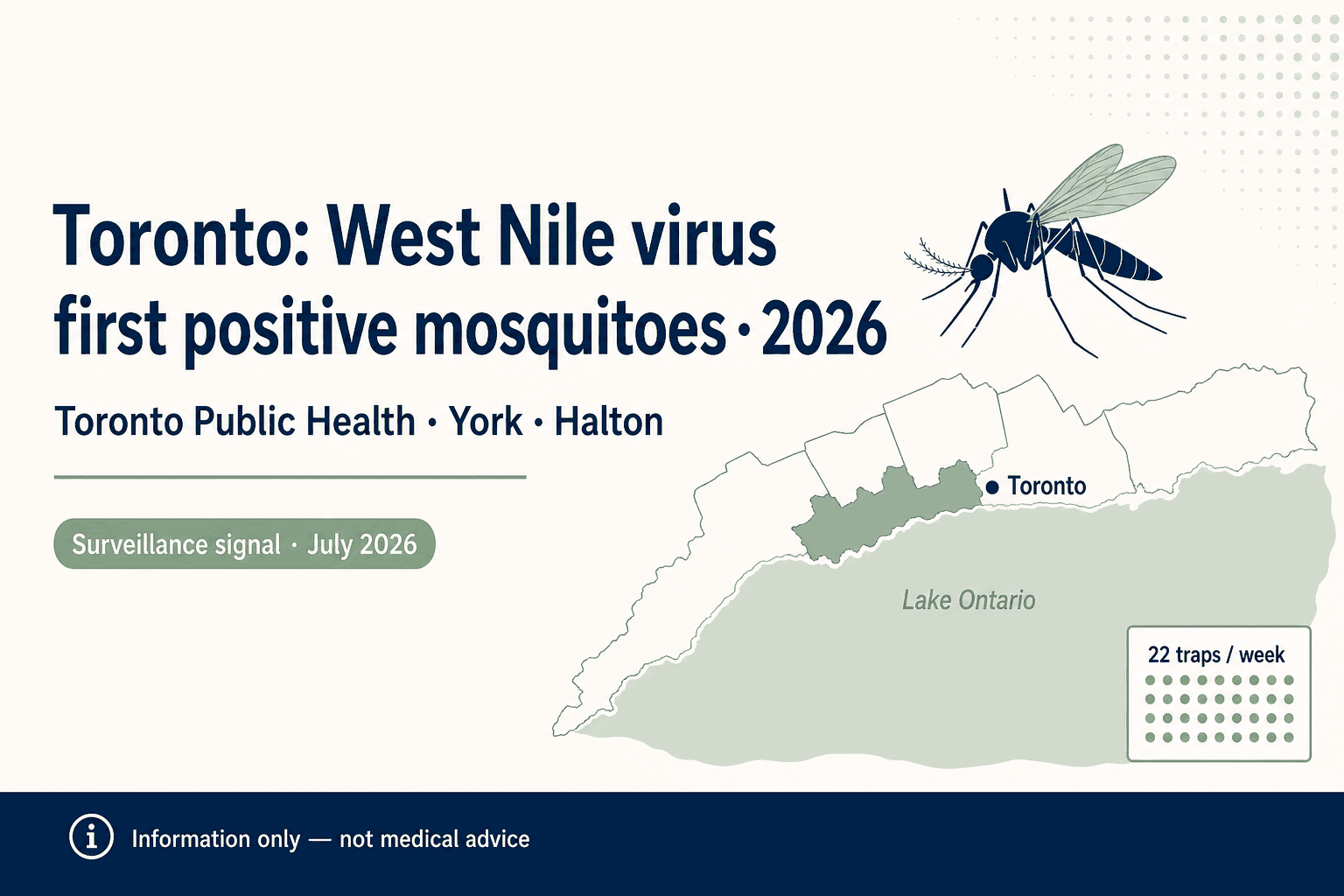
Toronto Public Health confirmed on 17 July 2026 that one batch of mosquitoes tested positive for West Nile virus, the first such finding in the city this season. This article maps TPH’s surveillance program, nearby York and Halton detections, federal reporting context, and the prevention steps officials list for residents.
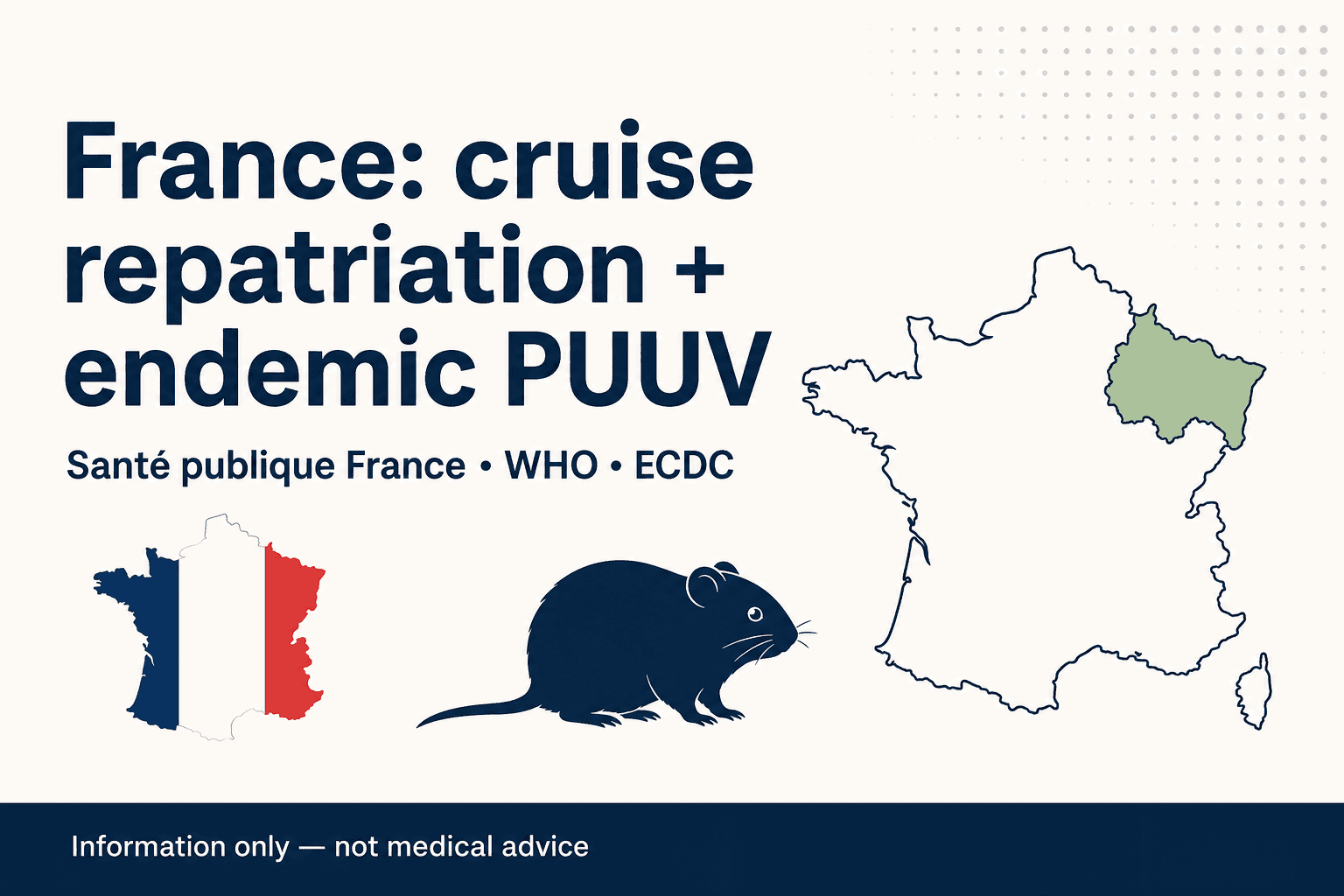
May 2026 put French headlines next to a cruise ship cluster, but France already had a long running hantavirus story in the northeast. This article separates repatriation news from national surveillance facts, using Santé publique France’s published 2024 mainland totals and official multinational ship updates.
Most hantavirus education is about droppings, dust, and ventilation. Andes virus adds a second chapter: rare but real person to person transmission under close contact conditions. This article stays inside CDC and WHO wording, then points to peer reviewed outbreak science from Argentina so you understand why a cruise ship cluster triggered global coordination.
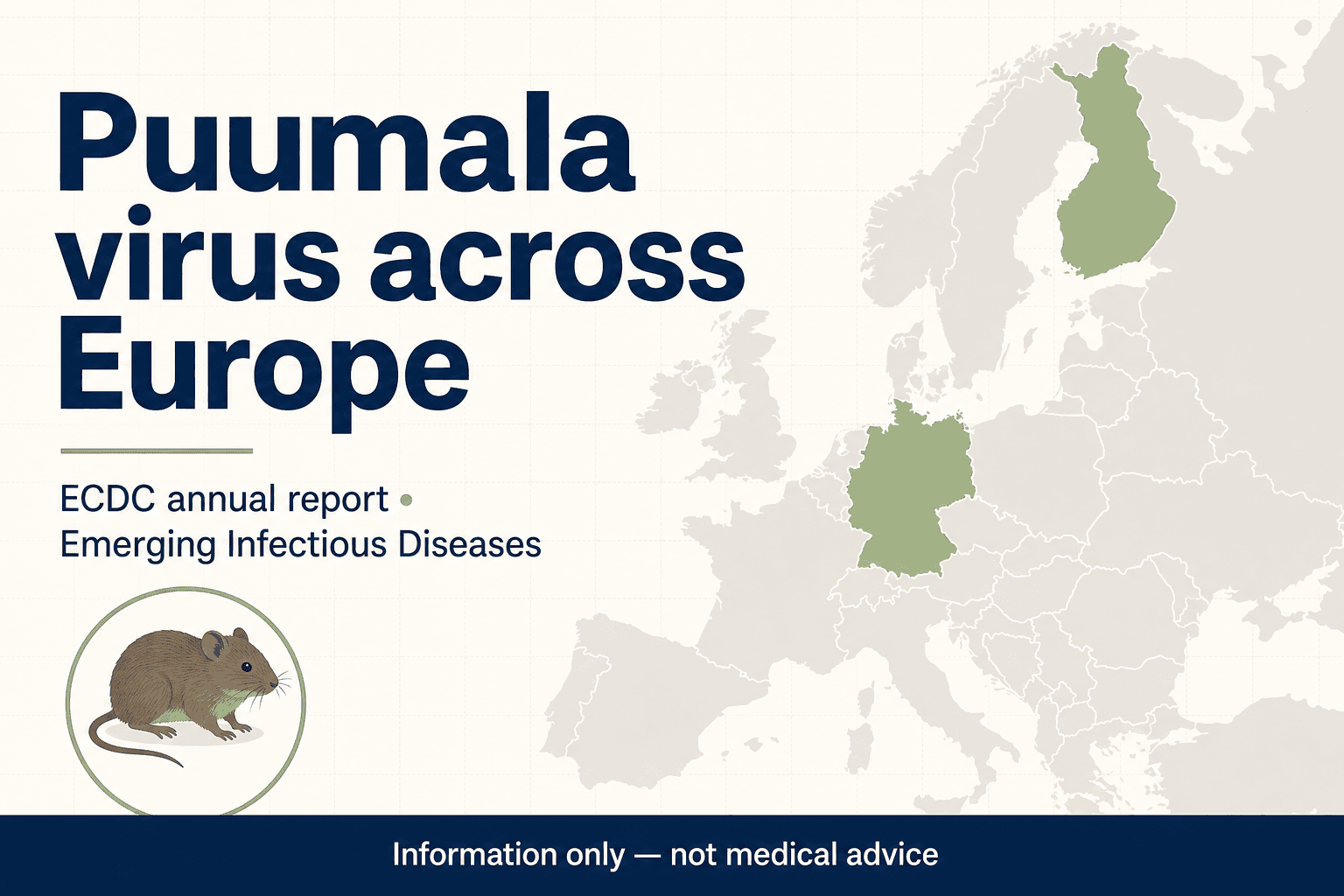
ECDC’s published European totals explain where most continental cases concentrate, while field studies show how Puumala lineages can appear surprisingly far south when ecology shifts. This article ties the 2023 annual report numbers to Finland, Germany, and Sweden signals, without pretending one cruise event defines endemic risk.
If you tried to line up WHO, CDC, ECDC, and PAHO on the same case total in May 2026, you hit a wall that is actually good governance: labs, case definitions, and posting times differ. This article restates only what each agency published, with dates, and explains why mismatched numbers can still all be “true.”
ECDC’s routine European work lives in annual epidemiological reports and atlas tools, while outbreak hubs spin up when a multinational event needs a European angle. Here is what the 2023 annual report actually quantifies, how ECDC covered the May 2026 Andes virus cluster on MV Hondius, and how to cite counts without pretending a single “Europe total” dashboard exists for every day.
CDC’s cumulative national map is not the same product as a weekly NNDSS table, and neither replaces your state health department during an active local investigation. Here is how CDC reports the 890-case national arc through 2023, how surveillance definitions work, and what CDC added in May 2026 about the Atlantic Andes virus ship cluster.
WHO and ECDC published multinational operational facts about the May 2026 MV Hondius cluster, while Canadian wire stories named how many Canadians journalists were told were aboard. Here is how to read each layer without mixing them up, plus what Health Canada’s general hantavirus pages do and do not cover.
CDC treats hantavirus disease as nationally notifiable, then sorts cases through NNDSS using separate definitions for HPS and non-HPS infection. Here is what that means for dashboards, weekly tables, and how you should read a headline number.
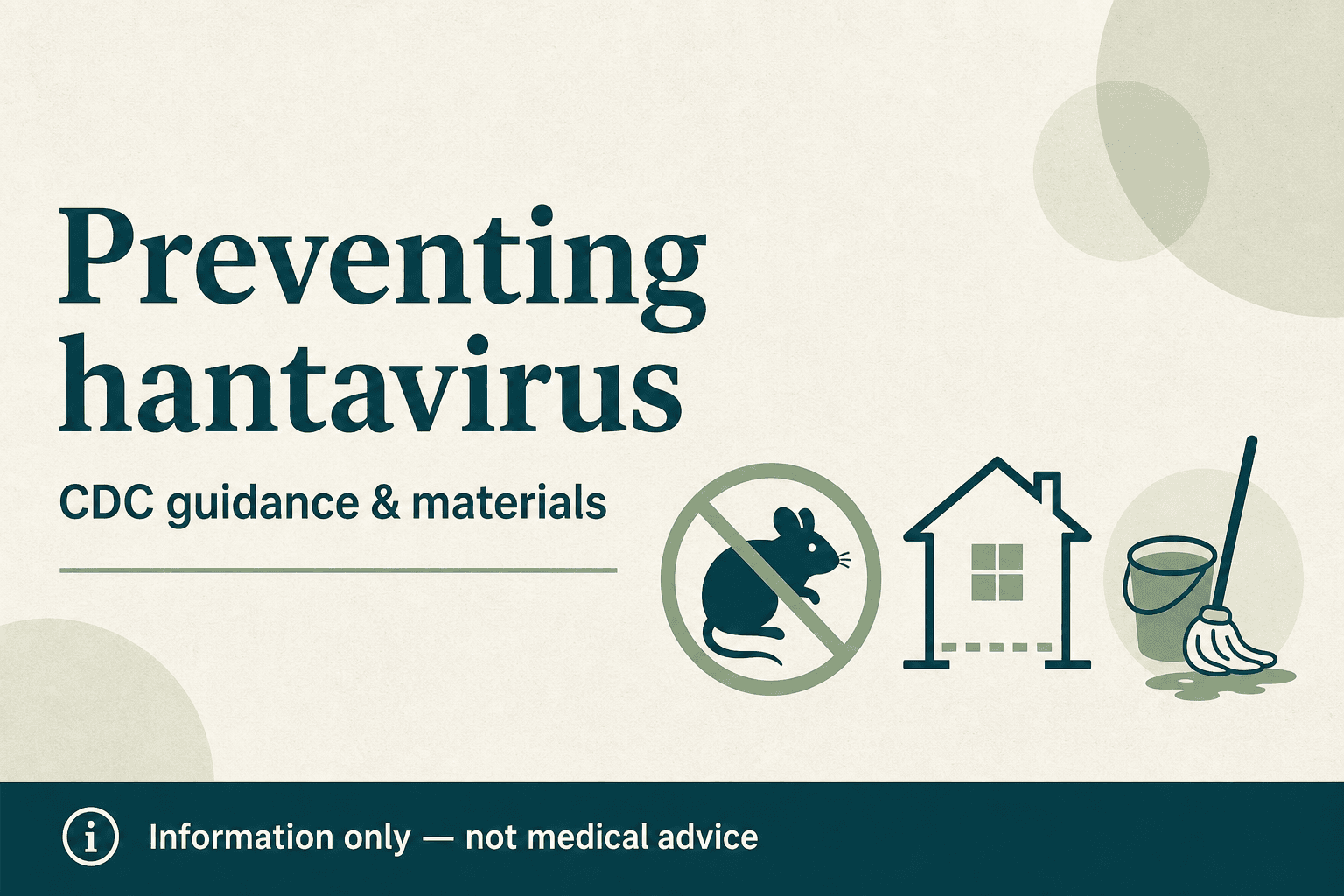
CDC’s U.S. prevention guidance boils down to keeping wild rodents out of living spaces, cleaning rodent waste the safe way, and knowing which shortcuts stir invisible dust. Here is how the agency groups those steps online, plus where to find its January 2025 public brochure PDF.
PAHO’s 19 December 2025 epidemiological alert describes rising hantavirus infection reports in endemic countries of the Americas, especially in the Southern Cone, and higher lethality in some places. Here is what the alert actually says, how it fits with U.S. CDC guidance, and how to read it without panic.