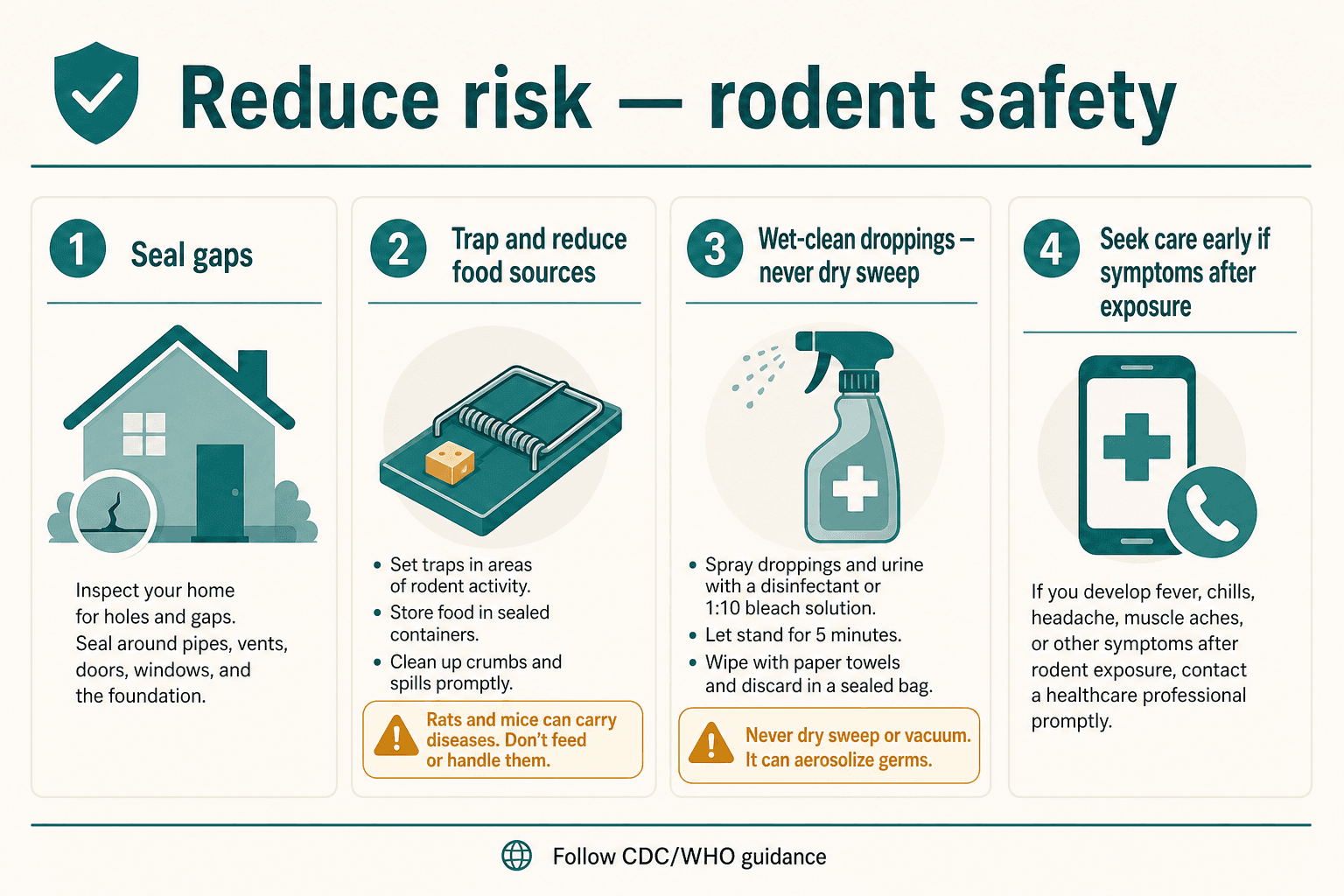
Know how exposure usually happens
CDC explains that fresh urine, droppings, or nesting material from infected rodents can aerosolize when disturbed; people breathe in the virus or introduce it through breaks in the skin or mucous membranes. Bites are possible but less common. In North America, deer mice are commonly discussed as reservoirs for the dominant cause of HPS.
High-risk settings and activities
- Cleaning cabins, sheds, vehicles, or storage areas after rodents were living there, especially if dust will be stirred up.
- Opening rarely used buildings at the start of a season without ventilation or wet-cleaning precautions first.
- Agricultural, forestry, pest-control, or wildlife research jobs that handle rodents or heavily infested sites; CDC lists occupational groups explicitly.
- Sleeping or camping where rodents nest indoors; CDC notes rural recreational exposures contribute to sporadic cases.
Everyday prevention aligned with CDC messaging
- Exclude rodents: seal gaps into homes, garages, and outbuildings; remove attractants such as accessible pet food or unsecured garbage.
- Trap to reduce populations where infestations exist; pair trapping with sanitation so new rodents do not replace old colonies.
- Never sweep or vacuum rodent waste dry; follow CDC’s dedicated cleanup guide for wet disinfection, protective equipment, and disposal steps.
- Teach everyone in the household when to call professionals; large infestations may require trained pest managers with respirators.
If you think you were exposed: plain-language checklist
- Stop disturbing the area. Leave dust settled until you can implement CDC wet-cleaning procedures or hire qualified help.
- Track timing. CDC’s public materials describe HPS symptom onset typically one to eight weeks after exposure for North American viruses, with progression days later to cough and shortness of breath. Record dates for clinicians.
- Watch for early symptoms: fever, fatigue, large-muscle aches, headache, dizziness, chills, gastrointestinal upset. About half of patients may experience the broader symptom list CDC publishes.
- Escalate quickly if breathing worsens. CDC’s clinician brief stresses emergency evaluation and ICU-capable care because decline can be swift once the cardiopulmonary phase begins.
- Call public health when advised. CDC instructs clinicians and patients to route suspected cases through state or local health departments for reporting and testing coordination.
Special note on Andes virus settings
WHO highlights that Andes virus, the strain discussed during South American outbreaks, has documented rare human-to-human transmission among close contacts. That fact matters mainly for household caregivers and travelers returning from endemic regions; it does not replace rodent-prevention fundamentals but does mean close contacts should follow local guidance during investigations.
When to seek medical attention immediately
- Worsening shortness of breath, chest tightness, or inability to speak full sentences.
- Persistent fever with rapidly evolving respiratory symptoms after rodent exposure or travel through rural endemic regions.
- Confusion, very low blood pressure, or bluish lips/fingertips, which caregivers should treat as emergencies.
Bring this page’s CDC/WHO references with you or quote them so clinicians can rapidly confirm testing pathways.