When a cruise ship cluster grabs attention, Europe’s quieter hantavirus rhythm can sound like background noise. That is a shame, because the continent’s routine surveillance story is where most residents actually meet risk: seasonal work outdoors, cabin maintenance, forestry, construction near rodent habitat, and slow geographic shifts in where infected reservoir populations are detected. Puumala virus is not a passenger manifest problem. It is an ecology and exposure problem that shows up in national notification tables and in peer reviewed field studies when lineages turn up outside their textbook map.
What ECDC’s 2023 annual report quantifies
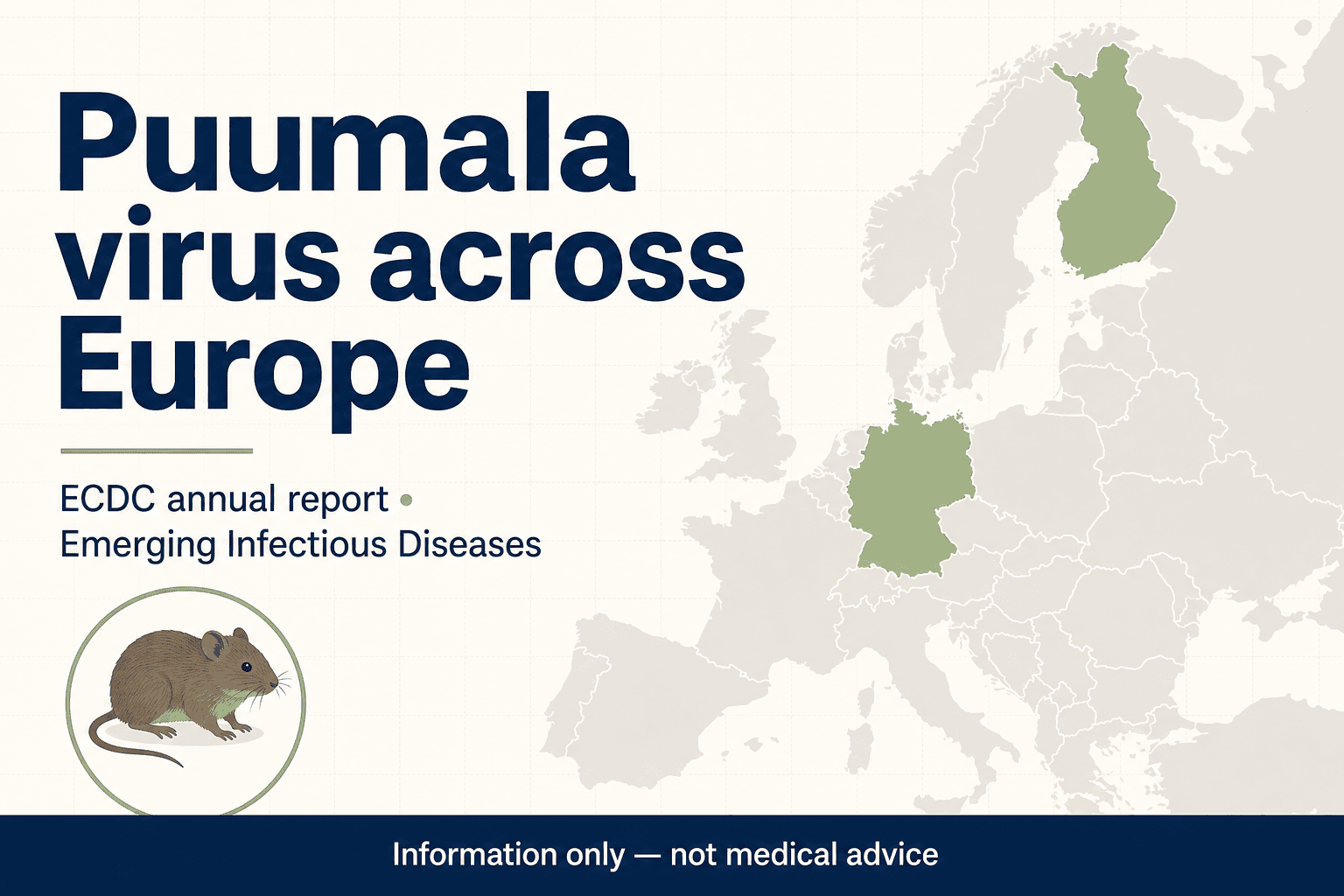
ECDC publishes hantavirus infection through scheduled surveillance products, including annual epidemiological reports based on The European Surveillance System (TESSy). The “Hantavirus infection - Annual Epidemiological Report for 2023” was published on 7 March 2025 and states it reflects 2023 data retrieved from TESSy on 6 November 2024. For 2023, the report states that 28 EU and EEA countries reported 1,885 cases of hantavirus infection, equal to 0.4 cases per 100,000 population. It also notes that 2023, along with 2020, marked the lowest notification rate recorded over the 2019 to 2023 period, and it states that Finland and Germany accounted for 60.5 percent of reported cases in the dataset summarized for that year.
Those numbers are not a moral judgment about any country. They are a measurement of where laboratory confirmed notifications concentrated in a specific reporting window, under European case definitions and national reporting practices. If you are building a mental model for travel, work, or land management decisions, the lesson is simpler: large parts of Europe can be low rate in a given year while still hosting intense local risk in particular habitats and seasons.
Germany and Finland: the two lions’ share countries in ECDC’s 2023 summary
ECDC’s 2023 report framing is useful because it prevents a common social media mistake: treating “Europe” like one uniform terrain. Germany’s southern and western forest regions have a long documented history of Puumala linked nephropathia epidemica burden with year to year variability tied to host population dynamics. Finland is repeatedly described in European surveillance narratives as a major endemic area for Puumala virus infection. When you read “60.5 percent in Finland and Germany,” read it as a prompt to zoom in: which counties, which seasons, which occupational exposures, and which local public health guidance.
Sweden’s southward signal: what a 2024 Emerging Infectious Diseases study adds
National totals can miss a second kind of headline: not “more cases,” but “cases where we did not expect the lineage.” A study published in Emerging Infectious Diseases in April 2024 reports nephropathia epidemica caused by Puumala virus in bank voles in Scania, southern Sweden, and discusses genotyping results consistent with Finnish Puumala lineages appearing far south of previously documented circulation patterns in Sweden. The article is the kind of source you want when someone claims a virus “respects borders.” Field biology does not work that way. Host movement, ecological connectivity, and sampling effort rewrite maps slowly, then suddenly.
This does not mean tourists should treat everyday Malmö like a hot zone. It means scientists and public health agencies have legitimate reasons to update reservoir surveillance assumptions and to communicate uncertainty carefully. The public version of that uncertainty sounds like: “we found evidence here, so we update maps and guidance, not panic.”
Compare clinical severity language without mixing viruses
European Puumala dominated presentations are often discussed in public health materials as nephropathia epidemica with a different severity profile than the hantavirus pulmonary syndrome patterns associated with some New World exposures. WHO’s general hantavirus fact sheet notes regionally different disease syndromes and mortality ranges across the family. The communication point is not “good virus versus bad virus.” It is: do not import South American outbreak imagery into a Finnish forest cabin risk conversation, or vice versa, without renaming the pathogen and the reservoir.
Where to start on this site after you read ECDC’s PDF
If you want European agency context tied to the May 2026 multinational ship investigation, open ECDC surveillance and May 2026 update. If you want practical prevention habits that still apply in rodent settings, open How to stay safe.
Research note
ECDC annual report facts were checked against the published “Hantavirus infection - Annual Epidemiological Report for 2023” on 11 May 2026. The Scania bank vole discussion cites the April 2024 Emerging Infectious Diseases article linked below. Atlas and dashboard values can update on their own schedule, so cite the exact ECDC publication you used, not a screenshot thread.
Frequently asked questions
Does a low European rate year mean personal risk is zero?
ECDC’s 2023 report describes a continent level notification rate of 0.4 per 100,000 while still documenting nearly two thousand reported cases across participating countries. Individual risk depends on local exposure, occupation, housing condition, and season, not on a continental average.
Why did Finland and Germany account for most reported cases in 2023?
ECDC’s annual epidemiological report for 2023 explicitly states that Finland and Germany accounted for 60.5 percent of reported cases among EU and EEA countries in that dataset. That is a reporting concentration fact, best interpreted alongside national surveillance narratives and reservoir ecology rather than as a travel ban scorecard.
What did the Scania study change about Sweden’s map story?
The Emerging Infectious Diseases article on Puumala virus in bank voles in Scania, southern Sweden, provides genotyping linked discussion consistent with Finnish lineage presence far south of previously documented circulation patterns in Sweden, which helps explain human cases reported in the region in prior years referenced in the paper.
Where should I pull official European totals for a school report?
Start from ECDC’s “Hantavirus infection - Annual Epidemiological Report for 2023” for a finished year snapshot, then use ECDC’s surveillance landing page tools for maps and tables appropriate to the year you need. Always include the publication date printed on the report PDF.